



Salt Chlorinator Technology: Engineering Better Pool Disinfection Systems
Introduction: The Technology Behind Modern Salt Chlorination
For decades, commercial and residential pool water treatment relied on manual dosing of liquid sodium hypochlorite or calcium hypochlorite tablets. While chemically effective, traditional chlorine dosing presents well-known operational headaches: hazardous chemical transportation, strong chloramine odors that irritate swimmers' eyes and skin, and rapid spikes and drops in free chlorine levels between maintenance visits.
Salt chlorinator technology fundamentally transformed pool water management by replacing chemical storage with on-site electrolytic generation. Instead of adding packaged chlorine, pool owners dissolve common mineral salt into the water, and an in-line electrolytic generator converts that dissolved salt into pure, active sanitizing hypochlorous acid automatically.
Yet, from an engineering perspective, a salt chlorine machine is far more than a simple pair of electrified metal plates. It is an intricate multi-physics system combining electrochemistry, fluid mechanics, power electronics, and real-time sensor feedback. Understanding the technology behind modern salt electrolysis is essential for pool builders, commercial facility engineers, and distributors seeking equipment that delivers consistent sanitization year after year.
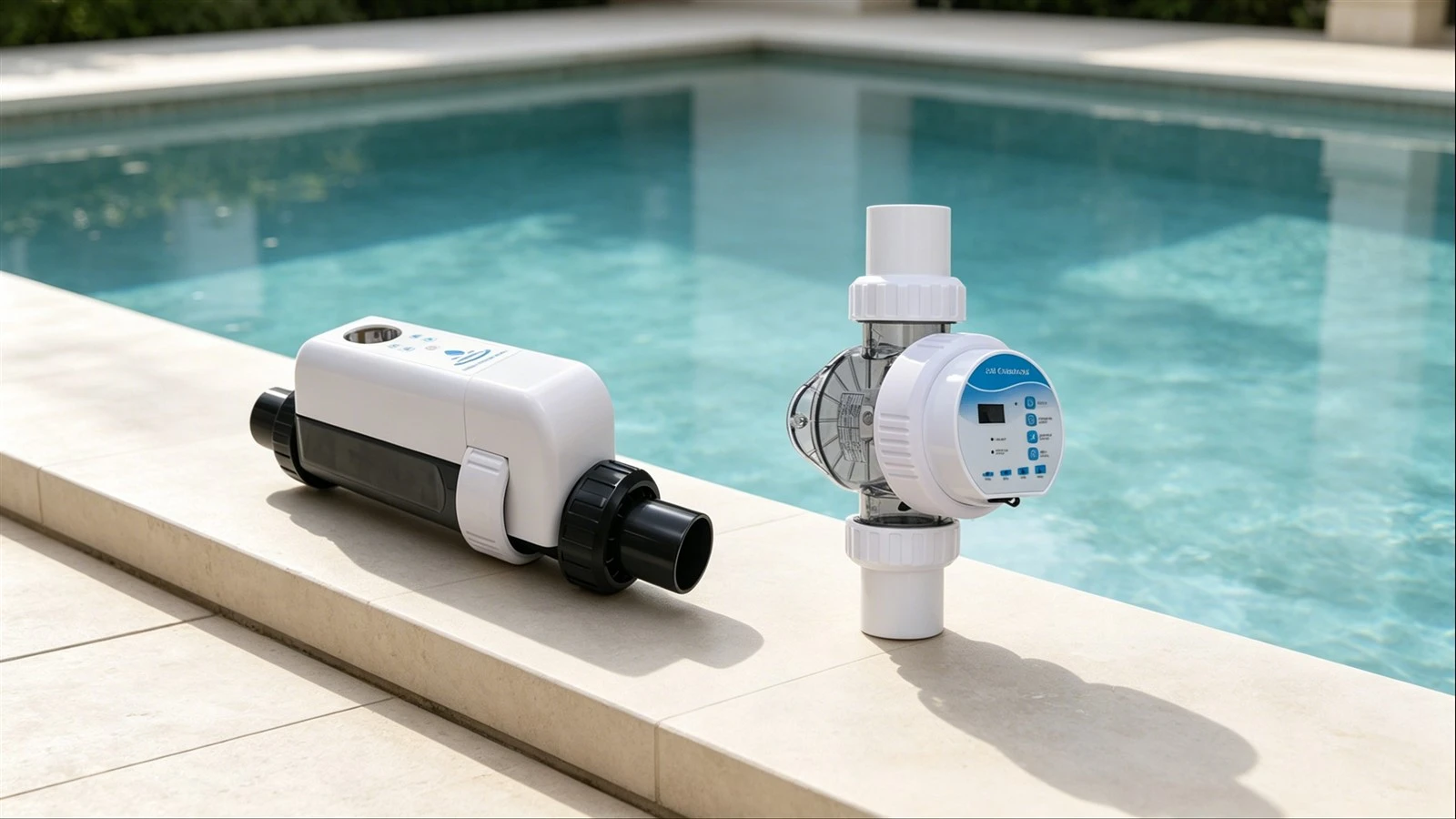
Understanding Salt Electrolysis and Chlorine Generation
The scientific principle behind a salt electrolysis system is straightforward, but executing it reliably in an outdoor plant room requires rigorous engineering control.
When mild saltwater passes through an energized electrolytic cell, low-voltage direct current (DC) flows between precisely spaced titanium electrode plates. This electrical energy drives an electrochemical oxidation-reduction reaction:
1. Anode Reaction (Oxidation): Chloride ions (Cl-) in the water lose electrons at the positively charged anode plates, producing pure chlorine gas (Cl2):
2Cl⁻ → Cl₂ + 2e⁻
2. Hydrolysis in Water: The dissolved chlorine gas instantly reacts with water molecules to form hypochlorous acid (HOCl)-the most potent sanitizing agent in water treatment-and hydrochloric acid (HCl):
Cl₂ + H₂O ⇌ HOCl + HCl
3. Cathode Reaction (Reduction): At the negatively charged cathode plates, water molecules are reduced to produce hydrogen gas (H2) and hydroxide ions (OH-):
2H₂O + 2e⁻ → H₂ + 2OH⁻
4. Closed Natural Cycle: As the hypochlorous acid sanitizes pool water by destroying bacteria, algae, and organic contaminants, it reverts back into harmless chloride ions. The water flows back to the pool, where the cycle repeats continuously without consuming the dissolved salt.
Key Components of a Salt Chlorinator
To maintain this electrochemical reaction seamlessly without user intervention, a high-performance salt chlorinator relies on four synchronized core subsystems:
1. The Electrolytic Cell
The cell is the heart of the system. It consists of a transparent, pressure-rated polymer housing containing a stack of Grade 1 titanium plates coated with a catalytic Mixed Metal Oxide (MMO)-predominantly Ruthenium and Iridium oxides. The transparent casing allows technicians to visually inspect plate condition and water flow without taking the plumbing apart.
2. The Electronic Control Unit
The control unit functions as the brain of the machine. Driven by dedicated microcontrollers, it manages output levels, calculates runtime schedules, executes automated reverse-polarity self-cleaning cycles, and interfaces with digital displays or wireless smartphone applications.
3. The Switch-Mode Power Supply (SMPS)
Converting alternating mains current (110V/230V AC) into clean, constant-current low-voltage DC power requires advanced power electronics. High-efficiency switch-mode power supplies maintain steady electrolytic output despite utility voltage fluctuations and severe ambient temperature swings.
4. Sensors and System Protection Architecture
Safety is paramount. Integrated mechanical flow switches ensure the cell never energizes unless sufficient water circulation is detected. Real-time electrical sensors monitor conductivity, temperature, and current draw, providing automatic warnings if salinity falls below optimal levels or if water temperatures drop near freezing.
What Determines Salt Chlorinator Performance?
In field installations, chlorine generation efficiency is governed by five interdependent parameters that every pool engineer must calculate:
Cell Chamber Hydraulic Architecture
Water velocity across the titanium plates must be uniform. If internal flow distribution is poorly balanced, 'dead zones' form where hydrogen gas bubbles linger. Trapped gas insulates the plate surface, causing localized thermal spikes and uneven plate wear. Streamlined hydraulic chambers ensure immediate gas evacuation and optimal contact time.
Operating Current Density and Voltage Stability
Chlorine output is directly proportional to current passing through the plates (Amperes per square centimeter). Maintaining a constant current rather than constant voltage is crucial, because water conductivity shifts continuously as water warms up or cools down.
Water Flow Rates
Adequate flow carries away newly generated hypochlorous acid and sweeps away microscopic mineral precipitates. Insufficient flow can cause heat buildup inside the cell housing, stressing both the polymer body and the electrode coating.
Salinity Levels and Conductivity
Most residential and commercial systems operate within an optimal salinity window (typically 2,500 to 4,000 ppm). Operating below the threshold forces the power supply to work harder against higher electrical resistance, while excessive salinity can lead to unnecessary component stress.
Water Temperature and Thermal Compensation
Electrochemical reaction rates rise with temperature. In cold water, electrical resistance increases, which can strip precious metal coatings if the system runs at full power. Intelligent controllers automatically reduce output or enter protection mode when water temperatures dip.
Engineering Challenges in Salt Chlorinator Development
Designing an electrolytic generator that survives years of continuous plant room operation involves solving four fundamental engineering challenges:
1. Calcium Scaling and Mineral Buildup
Electrolysis inherently creates a localized high-pH environment near the cathode plates, causing dissolved calcium and magnesium to precipitate as hard mineral scale. Scale insulates the plates, choking electrical current and halting chlorine production. To solve this, advanced systems use automatic reverse-polarity technology, reversing current direction at programmed intervals to naturally shed calcium flakes without requiring manual acid washing.
2. Electrode Degradation and Coating Adhesion
Raw titanium rapidly passivates in saltwater, forming an insulating oxide layer. The multi-layer Ruthenium-Iridium coating serves as the active catalyst. Ensuring that this microscopic coating adheres firmly through thermal cycling and repeated polarity reversals requires cleanroom manufacturing and multi-pass thermal baking.
3. Power Supply Heat Dissipation and Surge Resilience
Enclosing high-wattage power supplies in sealed, weather-resistant boxes creates significant thermal challenges. Engineering effective internal aluminum heat-sinks, paired with multi-stage surge suppression to withstand lightning transients and inductive pump kickbacks, is critical for long-term PCB life.
4. Fail-Safe Operating Protection
If a circulation pump shuts off while electrolysis continues, hydrogen and chlorine gas will rapidly build explosive pressure inside the piping. Multi-tier mechanical flow switches and optical flow sensors provide essential hardware-level fail-safes to shut down power instantaneously if water movement stops.
How Smart Control Technology Improves Pool Disinfection Management
Modern pool disinfection technology has evolved from isolated hardware into connected plant room ecosystems. Today's smart chlorinators act as central automation hubs:
Pump-Chlorinator Interlocking: Synchronizing chlorinator runtime directly with variable-speed filtration pumps, maximizing energy efficiency by running low-speed circulation during peak chlorination hours.
Automated Chemistry Dosing: Integrating optional pH and ORP sensors that automatically command peristaltic acid pumps to keep water chemistry in perfect balance without manual testing.
Connected IoT Monitoring: Industrial RS485/Modbus communication and Wi-Fi/Bluetooth IoT connectivity, enabling facility managers and pool owners to monitor salt levels, adjust output, and receive diagnostic warnings remotely on smartphones or building automation screens.
HOTOOK's Approach to Salt Chlorinator Product Development
At HOTOOK, our product development philosophy is rooted in direct engineering control. We do not source pre-assembled third-party cells or generic power boards. Our multidisciplinary engineering teams oversee every stage:
Precision Mold & Hydraulic Design: Designing transparent, pressure-tested cell chambers that optimize hydraulic flow and simplify visual inspection.
In-House Electrochemical Engineering: Utilizing high-grade titanium substrates with tightly controlled precious metal coating formulations for maximized cell service life.
Proprietary Power Electronics & Firmware: Developing proprietary constant-current power electronics and smart firmware algorithms tailored for international electrical and environmental standards.
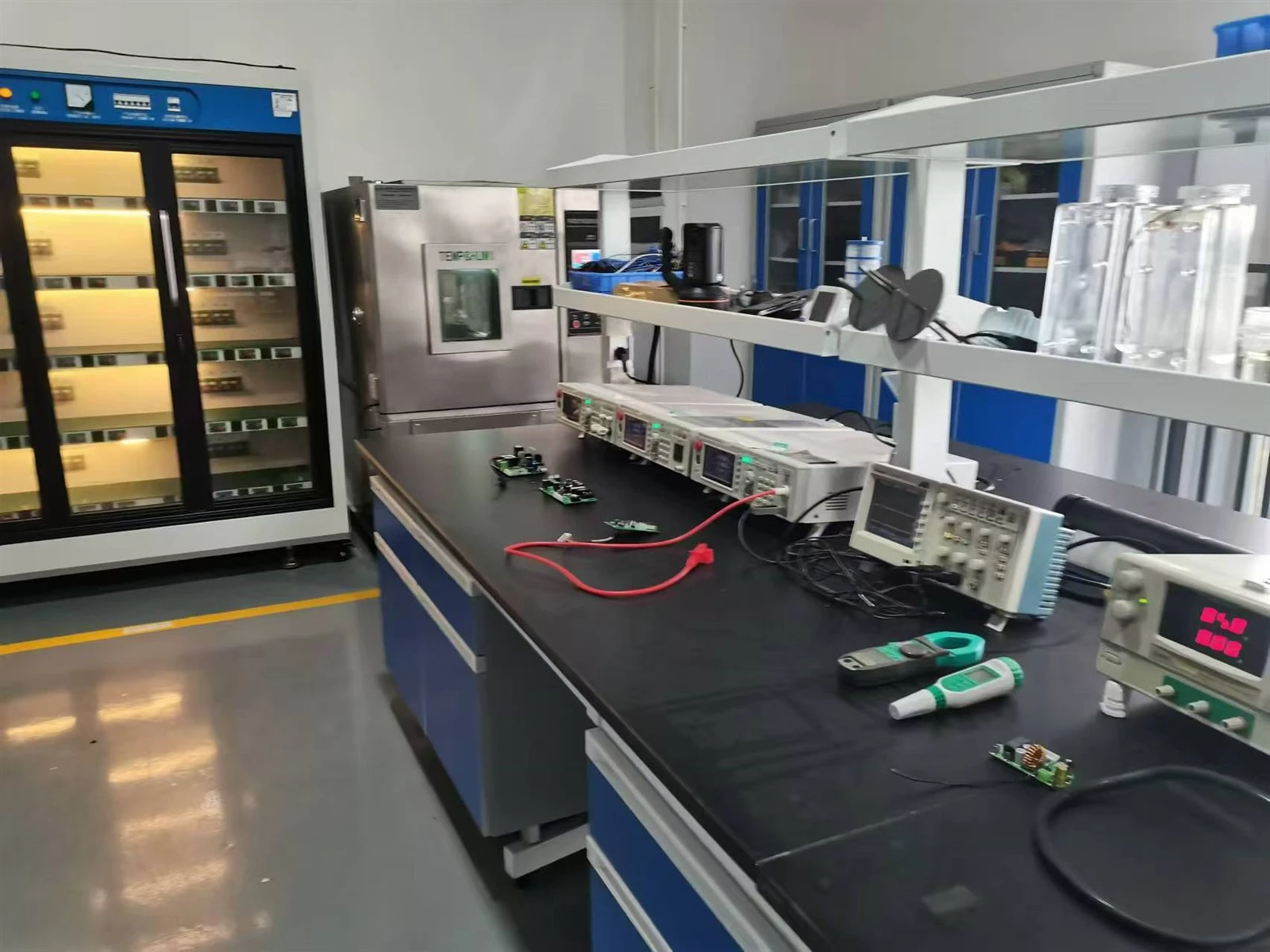
Exhaustive Factory Testing: Subjecting 100% of production units to continuous full-load electrical burn-in and active wet electrolysis testing before packaging.
Frequently Asked Questions
1. What technology is used in salt chlorinators?
Salt chlorinators use low-voltage direct current (DC) electrolysis across ruthenium-iridium coated titanium plates to convert dissolved sodium chloride into active hypochlorous acid (free chlorine) directly in the pool plumbing line.
2. How does electrolysis produce chlorine in a swimming pool?
As saltwater passes through the energized cell, chloride ions are oxidized at the anode plates to form chlorine gas, which immediately hydrolyzes with water into hypochlorous acid-the primary sanitizing agent that neutralizes bacteria and algae.
3. What affects salt chlorinator efficiency?
Chlorine generation efficiency depends on titanium plate coating quality, constant-current electrical stability, uniform water flow velocity across the plates, optimal water salinity, and operating water temperature.
4. Why is electrolytic cell design so important?
Cell design governs internal water flow and gas bubble evacuation. Well-engineered hydraulic chambers prevent hydrogen gas pockets from insulating plates and causing hot spots, ensuring even plate wear and reliable reverse-polarity self-cleaning.
5. How does water temperature affect chlorine production?
Colder water increases electrical resistance, slowing electrochemical reaction rates and potentially accelerating plate wear if run at high current. Intelligent chlorinators automatically adjust output duty cycles to protect plates in cold water.
6. Can smart controls improve pool disinfection management?
Yes. Smart control technology coordinates the chlorinator with circulation pumps and pH dosing systems, prevents hazardous gas buildup during pump downtime, maintains stable chemical equilibrium, and provides real-time mobile diagnostic monitoring.