



Salt Chlorinator Manufacturing: HOTOOK's Approach to Quality and Reliability
Introduction: Why Manufacturing Quality Matters in Salt Chlorinators
Ask any seasoned pool equipment importer what keeps them up at night during the peak swimming season, and the answer is rarely sales volume. It is warranty claims. In our business, shipping a container of salt chlorine generators across the ocean is only the first step. The real test begins when those units are installed in outdoor plant rooms-subjected to continuous summer heat, high humidity, corrosive saltwater splash, and unstable electrical grids.
When an inferior electrolytic cell burns out prematurely or a poorly sealed power board trips a circuit breaker, the overseas factory is thousands of miles away. It is the local distributor who bears the immediate cost: sending service vans out for emergency repairs, tying up capital in spare parts inventory, and defending their brand reputation against frustrated pool builders.
That is why choosing the right salt chlorinator manufacturer is the most critical supply chain decision you will make. Commercial reliability cannot be inspected into a product at the final packing line-it must be engineered and built into every single step of the manufacturing process. At HOTOOK, our entire manufacturing philosophy centers on one core principle: building heavy-duty, field-proven pool disinfection systems that protect our partners' margins and peace of mind.
What Defines a Professional Salt Chlorinator Manufacturer?
Over the years, the export market has seen a clear divide between two types of suppliers in China: trading assemblers and genuine manufacturing plants.
A trading assembler typically operates out of a small rented workshop. They buy generic clear plastic housings from one supplier, basic power transformers from another, unbranded titanium mesh from open markets, and manually wire them together. They have no control over coating thicknesses, no testing facilities for hydraulic pressure, and zero software capability when communication bugs emerge.
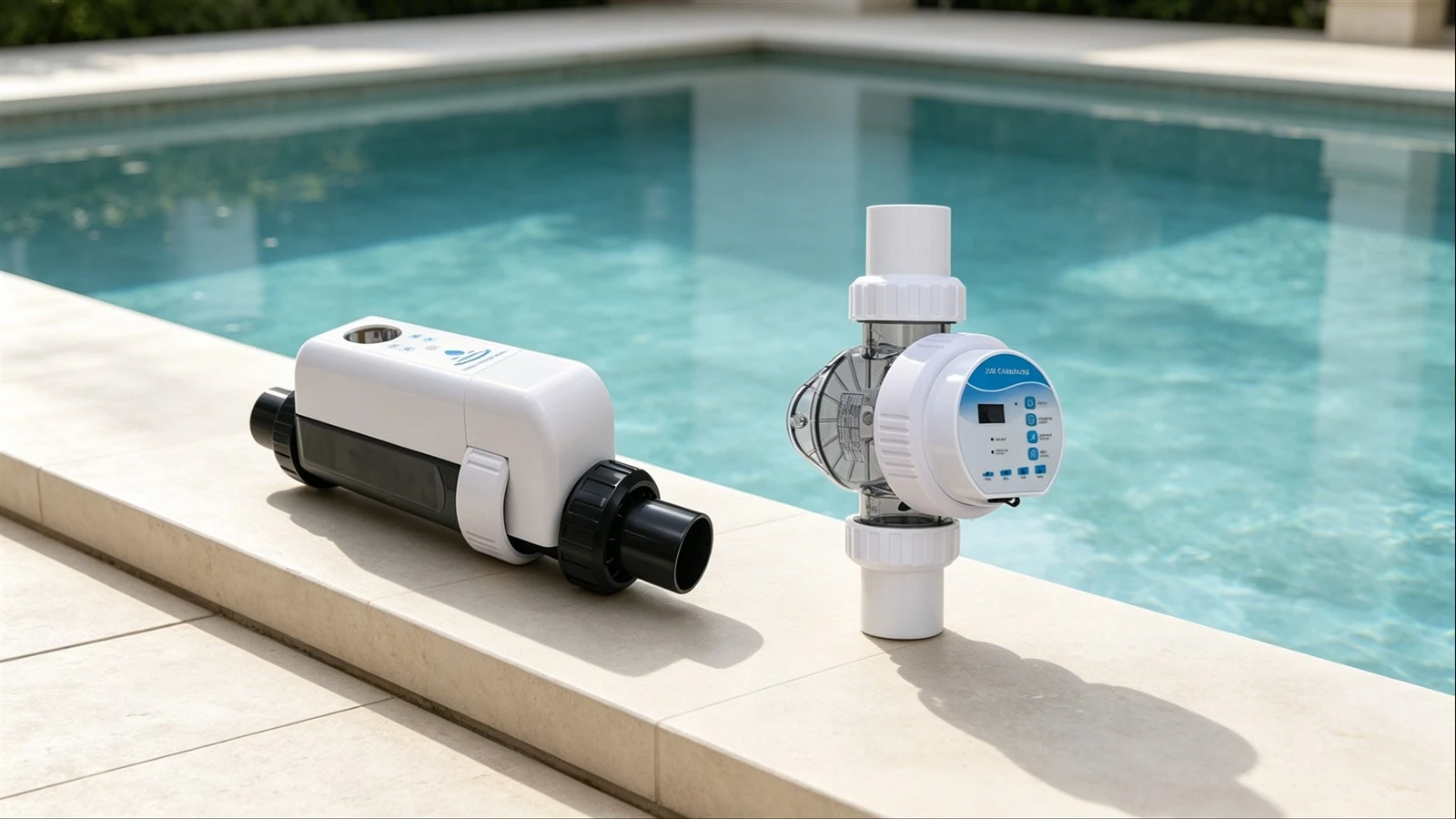
A true professional salt chlorinator manufacturer operates fundamentally differently. At HOTOOK, our facility integrates complete engineering and manufacturing capabilities under one roof:
Direct In-House R&D: Dedicated engineering divisions for mechanical tooling, high-efficiency power electronics, and embedded control firmware.
Controlled Component Sourcing: From aerospace-grade Grade 1 titanium sheets to precision polymer injection molds, every critical component is verified against strict technical specifications.
Standardized Production Flow: Synchronized production lines with dedicated stations for PCB surface mounting, ultrasonic sensor welding, and potting.
Comprehensive Quality Gates: Every single control panel and electrolytic cell undergoes 100% full-load electrical burn-in and live wet testing before boxing.
Salt Chlorinator Manufacturing Process
To understand why HOTOOK units deliver consistent service life in demanding climates, it helps to walk through the exact steps of our production workflow.
1. Engineering Design & Tooling Validation
Every HOTOOK product begins with precision 3D CAD modeling and mold engineering. We design our cell housings with optimized hydraulic pathways to prevent dead zones where hydrogen gas can pocket, while our control chassis are designed with dedicated internal airflow channels to dissipate heat away from sensitive power components.
2. Raw Material and Component Sourcing
Quality starts with raw materials. We source Grade 1 titanium substrates accompanied by certified mill test sheets. For power supplies and control boards, we strictly procure industrial-grade microcontrollers, heavy-duty MOSFETs, and high-temperature electrolytic capacitors from internationally recognized component manufacturers, eliminating the field drift common in generic silicon.
3. Electrical Assembly and Housing Injection
In our electronics workshops, high-speed automated Surface Mount Technology (SMT) lines place components onto multi-layer PCBs with microscopic precision. Every board undergoes automated optical inspection before receiving a multi-layer conformal moisture-proof coating. Simultaneously, our injection molding division produces UV-stabilized, impact-resistant ABS and polycarbonate housings built to endure intense outdoor sunlight.
4. Electrolytic Cell Fabrication and Assembly
The electrolytic cell is the heart of any salt chlorine machine. Our titanium plates undergo automated laser cutting, surface etching, and proprietary Ruthenium-Iridium Mixed Metal Oxide (MMO) dip-coating followed by high-temperature thermal baking in cleanroom chambers. The plates are then precisely spaced and ultrasonic-welded into clear polymer bodies with integrated flow switches.
5. Final Integration and Full-System Validation
At the final assembly stations, calibrated torque screwdrivers secure terminals and waterproof cable glands. Connectors are verified for tight mechanical interlocks, and the completed units move directly into our quality inspection bays for active electrical and wet testing.
Key Quality Factors in Salt Chlorinator Production
When engineering a salt chlorine generator for global markets, five technical factors determine whether a unit will last five seasons or fail in five months:
1. Electrical Safety and Surge Suppression
Pool plant rooms are notoriously prone to power surges from nearby pump startups, grid fluctuations, and lightning strikes. HOTOOK builds multi-stage surge protection and galvanic isolation directly into its switch-mode power supplies, preventing transient spikes from damaging the main microprocessor.
2. Ingress Protection and Weatherproofing
Chlorinators operate in wet, chemical-rich environments. HOTOOK control enclosures feature double-lip silicone gaskets and IPX5 weather-resistant engineering, keeping high-pressure washdowns, driving rain, and corrosive chlorine vapor from entering the electronics bay.
3. Electrolytic Cell Stability and Coating Adhesion
Electrolysis is a destructive environment. Poorly coated titanium plates shed their precious metal layer within hundreds of operating hours, leading to sudden drops in chlorine generation. HOTOOK's multi-pass thermal baking ensures deep molecular adhesion of the Ruthenium-Iridium coating, providing sustained output across thousands of runtime hours.
4. Intelligent Control System and Diagnostics
A chlorinator should protect itself. HOTOOK's proprietary firmware continuously measures cell voltage, current draw, and water conductivity. If salt levels drop too low or water temperature drops below operating thresholds, the system automatically dials back output or enters protective standby mode, preventing plate stripping.
5. Multi-Tier Hardware Protection Features
Every HOTOOK unit includes hardware-level fail-safes: mechanical flow switches to prevent dry firing and dangerous gas accumulation, thermal cutoff sensors on internal heat-sinks, and short-circuit protection across the electrolytic cell terminals.
Product Testing and Quality Inspection
Inspection at HOTOOK is not a sample check-it is a mandatory gate every production unit must pass.
Electrical & High-Voltage Safety Testing
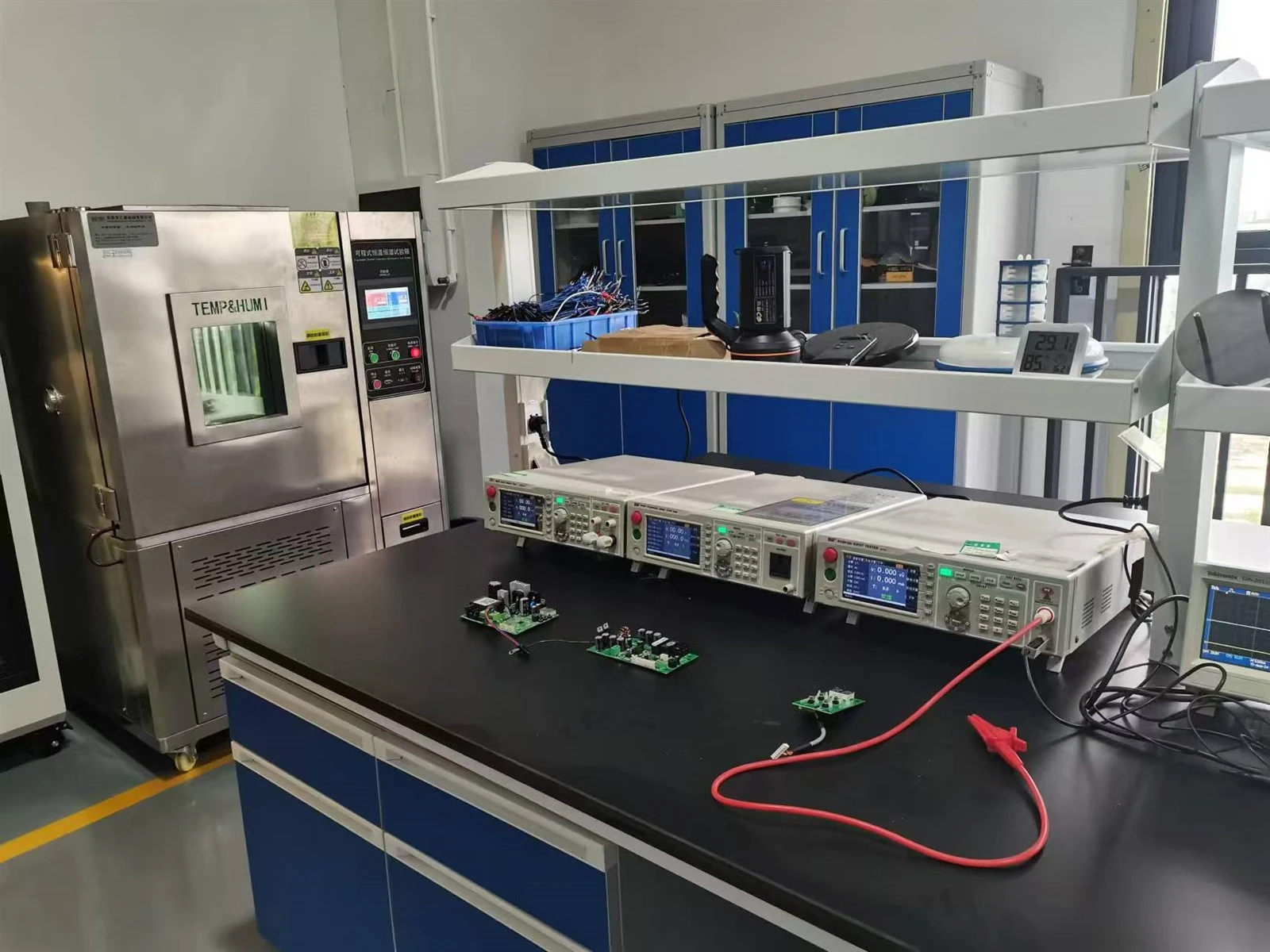
Every assembled controller undergoes dielectric withstand (Hi-Pot) testing and ground continuity verification to ensure absolute electrical isolation, meeting CE, EMC, and international low-voltage safety directives.
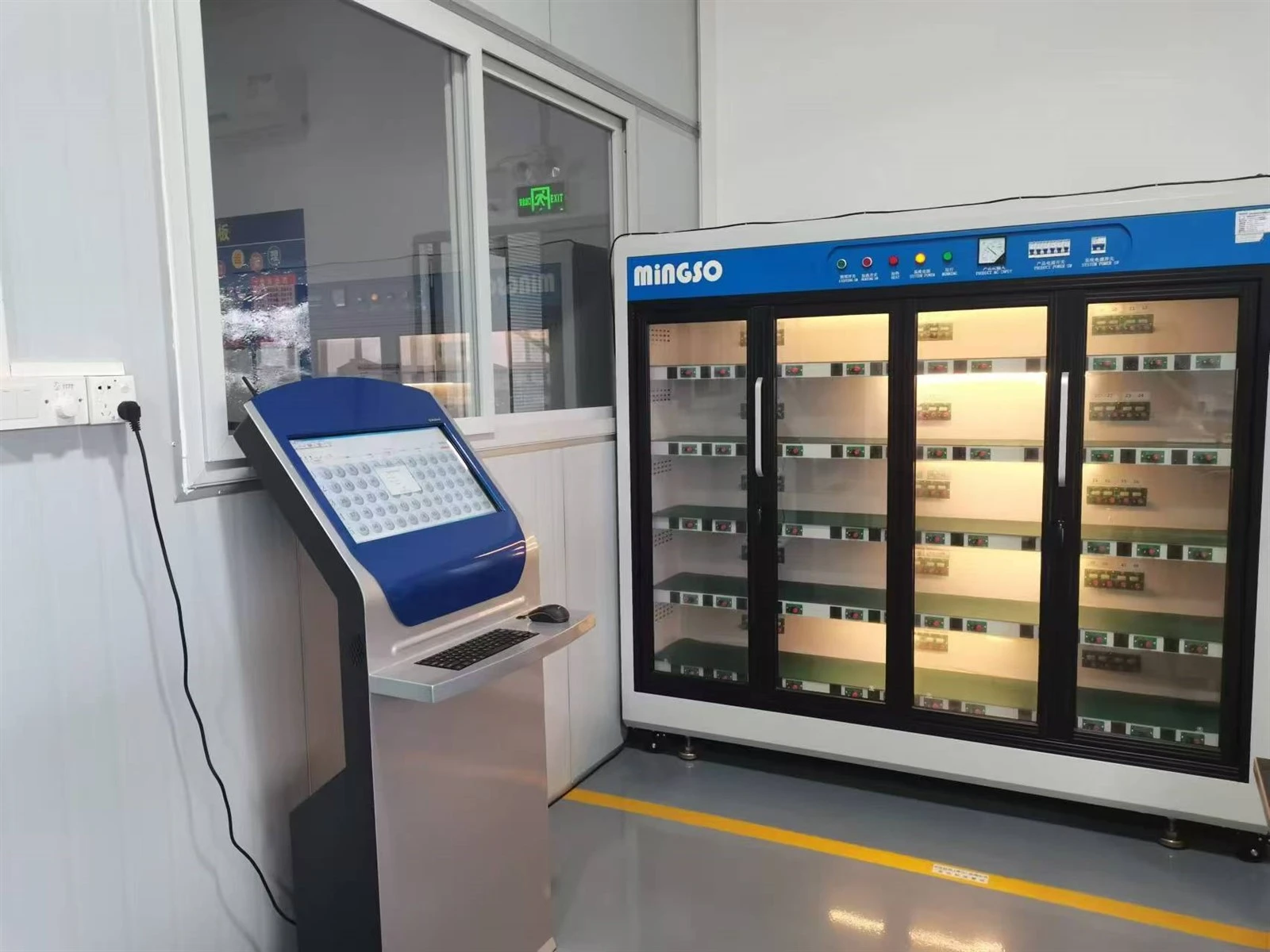
100% Full-Load Burn-In Under Temperature
We do not perform quick power-on tests. Every single control unit is connected to active electrolytic load banks inside our testing chambers, operating continuously under full output for 4 to 8 hours. Thermal cameras scan for component hot spots to ensure heat-sink efficiency before a unit is approved.
Wet Hydrostatic and Electrolysis Verification
Batch samples from each production run are installed on wet test loops. We test cell housings under hydrostatic pressures up to 4.0 Bar (58 PSI) to guarantee leak-free operation, while measuring active chlorine production rates (g/h) with calibrated laboratory titration to verify that rated output matches real-world performance.
Out-of-Box Final Audit
Before carton sealing, final quality inspectors verify packaging integrity, accessory completeness (unions, flow switch cables, wall mounting brackets), manual translations, and label serial numbers for full batch traceability.
How Manufacturing Experience Improves Product Consistency
There is no shortcut for manufacturing experience. Over two decades of building precision pool hardware, HOTOOK has refined its Design for Manufacturability (DFM) guidelines. We know exactly where mold tolerances must be tightened to prevent O-ring pinching, how PCB trace layouts must be routed to avoid electromagnetic noise, and how to calibrate automated reverse-polarity cycles to minimize scale formation in hard-water regions like Southern Europe and Australia.
This institutional knowledge translates directly into high batch-to-batch consistency. When you order your fifth container from HOTOOK, the units on the pallets will match the exact dimensions, software response, and finishing quality of your first shipment.
Quality Support for Global OEM and ODM Customers
For international pool equipment brands and regional wholesalers looking to launch or upgrade their private label line, HOTOOK provides full engineering and quality backing:
Custom Industrial Styling: Custom-tooled front bezels, custom housing colors, and proprietary union interfaces that give your brand a unique market presence.
Firmware & Software Localization: Branded LCD startup screens, localized menu languages, customized Modbus register maps, and dedicated mobile app integration.
Turnkey Packaging: Full-color retail packaging, drop-test certified protective foam inserts, branded manuals, and laser-engraved serial tracking.
Direct Engineering Support: Direct access to our bilingual technical engineers for project calculations, wiring diagrams, and long-term supply of guaranteed replacement parts.
Frequently Asked Questions
1. How are salt chlorinators manufactured?
Salt chlorinators are manufactured through precision plastic injection molding for UV-resistant housings, automated SMT electronics placement for control boards, and specialized electrolytic cell fabrication using Grade 1 titanium plates coated with precious metal Mixed Metal Oxides (Ruthenium-Iridium), followed by multi-stage electrical burn-in and wet testing.
2. What quality tests should a salt chlorinator pass before shipment?
A commercial-grade salt chlorinator should pass dielectric high-voltage insulation tests, 100% full-load electrical burn-in under elevated ambient temperatures, hydrostatic pressure burst testing (up to 4.0 Bar), active chlorine output titration testing, and drop-tested packaging audits.
3. How do manufacturers ensure product consistency across large batches?
Manufacturers ensure consistency by maintaining strict tier-1 component vendor standards, utilizing automated SMT and laser-cutting machinery, enforcing standardized assembly torque specifications, and keeping engineering and production under one roof for immediate process oversight.
4. What certifications and compliance standards should buyers check?
International buyers should check for CE compliance, Low Voltage Directive (LVD) safety, Electromagnetic Compatibility (EMC) testing, RoHS environmental compliance, and verified IPX5 or IP68 waterproof ratings for control panels and submerged components.
5. Why is electrolytic cell quality so important?
The electrolytic cell is the working engine of the chlorinator. Substandard titanium substrates or thin, uneven precious metal coatings degrade rapidly under electrolysis, leading to loss of chlorine generation, severe scale buildup, and early cell failure within months.
6. How can importers evaluate a salt chlorinator factory?
Importers should verify whether the supplier possesses in-house R&D and tooling capabilities, check if they perform 100% full-load burn-in testing rather than simple spot checks, review their raw material traceability for titanium and electronics, and evaluate their ability to support comprehensive OEM/ODM customization.