

Fiberglass filters are widely used in various industries due to their excellent filtration efficiency, durability, and cost - effectiveness. As a fiberglass filter supplier, one question that frequently comes up from our clients is whether fiberglass filters are fire - resistant. In this blog post, I'll delve into the science behind the fire - resistance of fiberglass filters, explore the factors that influence it, and provide some real - world examples and considerations.
The Basics of Fiberglass Filters
Fiberglass filters are made from fine glass fibers that are woven or matted together to form a porous structure. This structure allows them to trap particles of different sizes as air or liquid passes through. They are commonly used in HVAC systems, automotive engines, and industrial filtration processes. The composition of fiberglass gives it certain inherent properties, including a relatively high melting point. Glass typically melts at temperatures ranging from 1400 - 1600°C (2552 - 2882°F), which is significantly higher than the temperatures commonly encountered in most normal operating environments.
Fire - Resistance Mechanisms of Fiberglass
The primary reason fiberglass has some degree of fire - resistance is its inorganic nature. Unlike many organic materials such as paper, cotton, or synthetic polymers, fiberglass does not burn easily. When exposed to a flame, fiberglass does not support combustion in the same way that organic materials do. Instead of catching fire and burning, it will start to soften and eventually melt at extremely high temperatures.
Another factor contributing to its fire - resistance is the way the glass fibers are arranged. The dense mat or weave of the fibers can act as a barrier, preventing the spread of flames and heat. This is similar to how a fire - resistant wall works, by slowing down the progress of a fire and containing it within a certain area.
Testing and Standards for Fire - Resistance
There are several industry standards that are used to test the fire - resistance of materials, including fiberglass filters. One of the most well - known standards is the UL 94 standard, which is used to evaluate the flammability of plastic materials. While fiberglass is not a plastic, similar principles can be applied when testing its fire - resistance.
In UL 94 testing, samples are exposed to a flame for a specified period of time, and their burning behavior is observed. Materials are classified into different categories based on how they burn, such as V - 0 (the highest level of fire - resistance, where the material stops burning within 10 seconds after the flame is removed), V - 1, and V - 2. Fiberglass filters often meet or exceed these standards, indicating a high level of fire - resistance.
Real - World Applications and Considerations
In real - world applications, the fire - resistance of fiberglass filters can be a crucial factor. For example, in HVAC systems in commercial buildings, fire - resistant filters can help prevent the spread of fire through the ductwork. If a fire were to start in one part of the building, the filters could act as a barrier, reducing the risk of the fire spreading to other areas via the air circulation system.
In industrial settings, such as chemical plants or manufacturing facilities, fiberglass filters are often used in environments where there is a risk of fire or explosion. The fire - resistance of these filters provides an additional layer of safety, protecting both the equipment and the workers.
However, it's important to note that while fiberglass is fire - resistant, it is not completely fireproof. In extremely high - temperature situations, such as a major industrial fire or a building fire with intense heat, the filters can still be damaged. The glass fibers may start to melt, and the filter's structural integrity may be compromised.
Our Product Range and Fire - Resistance
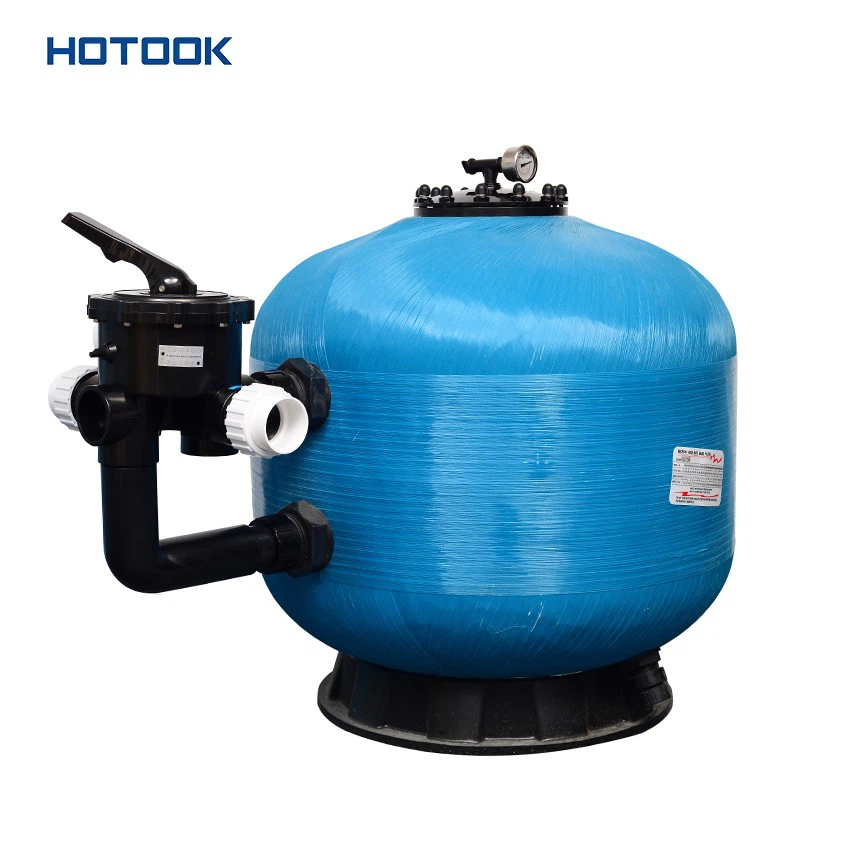
As a fiberglass filter supplier, we offer a wide range of products, each designed to meet different filtration needs and fire - resistance requirements. For example, our Grey Side Mounted Fiberglass Sand Filter is not only highly efficient in filtering sand and other particles but also has excellent fire - resistance properties. It is suitable for use in outdoor and indoor environments where there may be a risk of fire.
Our Blue Top Mounted Fiberglass Sand Filter is another popular product. It is designed for easy installation and maintenance, and its fire - resistant design ensures long - term reliability in various applications.
The Blue Side Mounted Fiberglass Sand Filter is also a great option for those looking for a high - performance filter with good fire - resistance. It is built to withstand harsh conditions and provides reliable filtration over an extended period of time.
Factors Affecting Fire - Resistance
There are several factors that can affect the fire - resistance of fiberglass filters. One of the main factors is the thickness of the filter media. Thicker filters generally have better fire - resistance because they have more material to act as a barrier against heat and flames.
The quality of the glass fibers also plays a role. Higher - quality glass fibers with a more uniform composition and structure are likely to have better fire - resistance than lower - quality fibers. Additionally, any coatings or treatments applied to the filters can either enhance or reduce their fire - resistance. Some coatings may be designed to improve the filter's performance in other areas, but they could potentially affect its fire - resistance if not carefully formulated.
Conclusion and Contact for Purchase
In conclusion, fiberglass filters do have a certain degree of fire - resistance due to their inorganic nature and the way the glass fibers are arranged. They can play an important role in preventing the spread of fire in various applications, from HVAC systems to industrial settings.
However, it's important to choose the right filter for your specific needs, taking into account factors such as the expected operating environment, the level of fire - risk, and the required filtration efficiency. As a professional fiberglass filter supplier, we have the expertise and the product range to help you make the best choice.
If you are interested in purchasing our fiberglass filters or have any questions about their fire - resistance or other properties, please feel free to contact us. We are more than happy to assist you with your filtration needs and provide you with detailed product information and technical support.
References
- UL 94 Standard for Tests for Flammability of Plastic Materials for Parts in Devices and Appliances
- ASTM Standards for Fire - Resistance Testing of Materials
- Technical literature on fiberglass manufacturing and properties from leading glass fiber producers.